ROBOSCOPE VTM-5000 OR
Automated flaw detection and laser measurement system for wheel set axles of railway rolling stock — loco, carriage, wagon, metro-cars and trams. Full input and output NDT during scheduled repairs in automatic mode.
Request Quote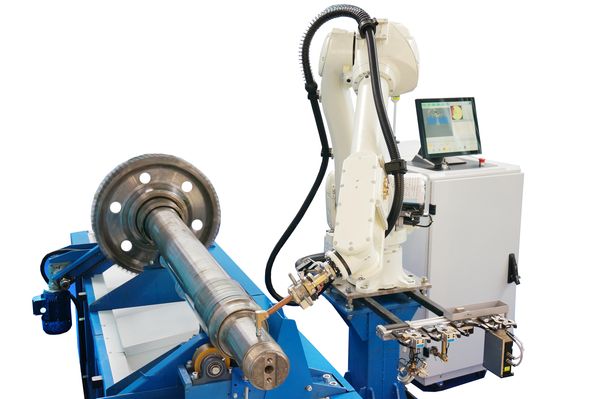
Technical Specifications
| Testing methods | Laser profilometry (measuring), Eddy-current, Ultrasonic |
| Target objects | Loose (pressed-off) wheel pair axles, motorized axles with gear wheels, shafts, pipes, cylinders |
| Inspection mode | Fully automatic with 3D script visualization |
| Loading / unloading | Automatic from accumulator with pneumatic gripper |
| Configuration | Adapts to geometry changes and axis types via settings menu |
| Additional modules | Loading / unloading, moving / rotating — included at design stage |
| Industry | Railway — loco, carriage, wagon, motor-rolling stock, metro, trams |
Description
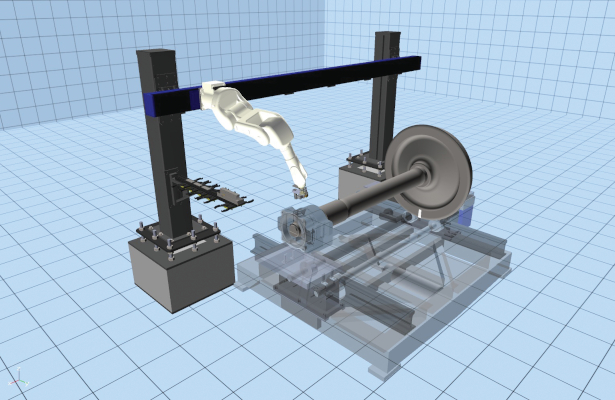
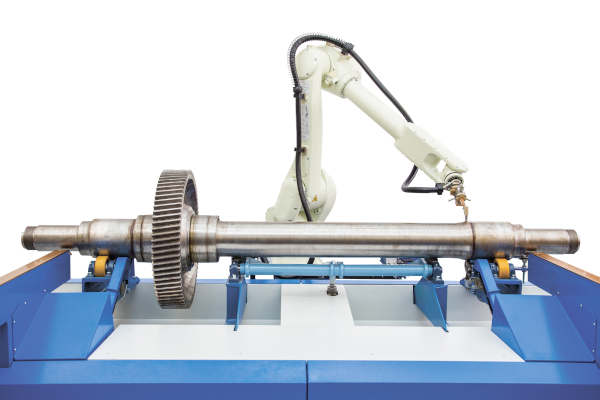
The laser scanning and flaw detection test bench ROBOSCOPE VTM-5000 OR is intended for non-destructive testing of loose (pressed-off) axes of wheel pairs of railway rolling stock. It is applied for input and output NDT of railway axes during scheduled repairs, including motorized axes with gear wheels and similar parts — shafts, pipes, cylinders, etc. Loading and unloading of test pieces is carried out automatically from the accumulator with a special pneumatic gripper.
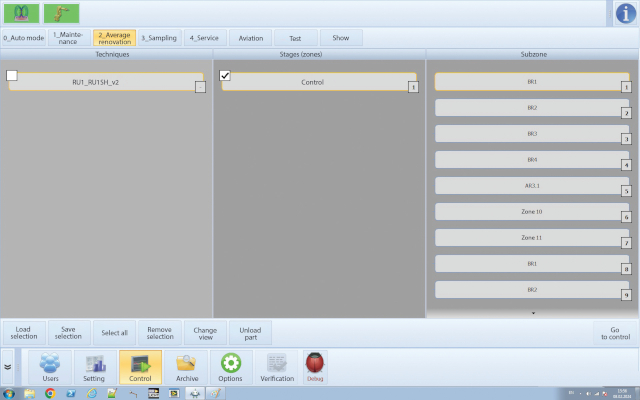
All test parameters — test piece velocity, probe selection and movement trajectories — are configured in the system at the procedure-forming stage via a settings menu. The inspection is managed in fully automatic mode with complete visualization of the 3D test script and testing parameters. Additional mechanization modules (loading/unloading, moving/rotating) are included in system functionality at the design stage.
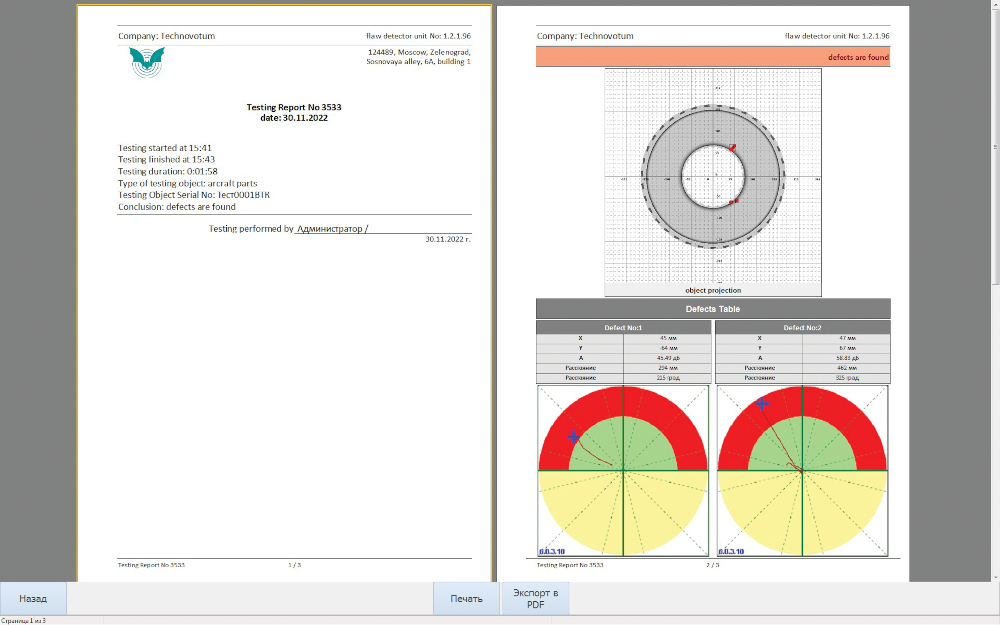
ROBOSCOPE VTM-5000 OR is a modern alternative to manual testing methods, completely eliminating the need for magnetic testing while ensuring full documentation of results and strict adherence to the specified testing methodology sequence.
Key Features
Gallery